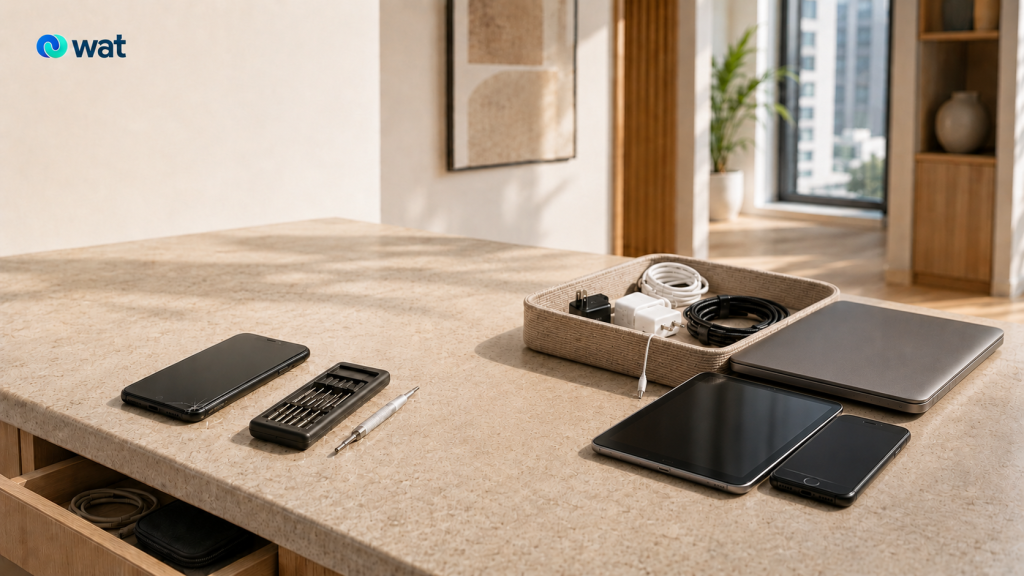
Remove or repair is not only a question for broken electronics.
In many homes across the UAE, old devices are kept because people are not sure what to do with them. Some are damaged. Some have weak batteries. Some need a simple repair. But many are still working perfectly.
A phone may have been replaced during an upgrade. A laptop may still turn on, but no one uses it anymore. A tablet may be sitting in a drawer after a newer model was bought. A charger, camera, headset, speaker, or small gadget may still be usable, but no longer needed.
That is why old electronics should not be seen only as broken or useless items.
Responsible e-waste handling can also apply to working devices, duplicate gadgets, upgraded electronics, unused accessories, and items that still have value but no longer have a purpose in the home.
The better question is not only: Is this broken?
It is: should this device be repaired, reused, securely handled, removed from storage, or sent into a responsible e-waste route?
This guide is for people in the UAE who want a clearer way to decide what to do with old, unused, working, upgraded, damaged, or unwanted electronics before they stay forgotten in drawers or end up in regular waste.
Why old electronics stay at home for so long
Most people do not keep old electronics because they want clutter.
They keep them because the next step is unclear.
A device may feel too valuable to throw away. It may still contain personal photos, files, messages, banking apps, or saved accounts. It may be broken, but not completely useless. It may still work, but no one needs it anymore. It may have a battery issue, a cracked screen, a missing charger, or outdated software.
So the device stays where it is.
Over time, homes can accumulate:
- old phones
- unused laptops
- tablets
- chargers and cables
- headphones and speakers
- cameras
- gaming accessories
- routers and small electronics
- power banks
- working devices replaced during upgrades
One item in a drawer may not seem like a problem. But when old electronics keep building up, useful devices, recoverable materials, and data-bearing items remain unmanaged for longer than necessary.
A better approach is to make a simple decision earlier: keep it, repair it, reuse it, securely handle it, or move it into a responsible collection route.
Remove or repair does not mean broken or useless
A common misunderstanding is that e-waste management companies only handle broken, damaged, or useless electronics.
That is not the case.
Many items submitted for responsible e-waste handling may still work. Some may even be new, barely used, or in very good condition. They are simply no longer needed because the owner upgraded, received a replacement, cleared storage, moved homes, changed devices, or no longer has a use for them.
This can include:
- working phones
- new or unused devices that are no longer needed
- laptops replaced during upgrades
- tablets still in good condition
- duplicate chargers
- extra cables
- headphones and accessories
- cameras and small gadgets
- electronics kept in drawers for years
The item does not need to be broken before it deserves a responsible next step.
Working devices can still enter a responsible e-waste route
A working device that is no longer needed may still have value.
It may be suitable for reuse. It may be repairable for someone else. It may contain parts or materials that can be recovered. It may also need secure data handling before anything else happens.
For example, a responsible e-waste company like WAT can help people and businesses in the UAE move old, unused, working, upgraded, or damaged electronics into a managed collection and handling process instead of leaving them unmanaged at home or mixing them with regular waste.
The aim is not to treat every item as waste. The aim is to move each item into the right route based on its condition, usefulness, safety, and data risk.
For a wider look at why keeping materials and products in use matters, see WAT’s related blog,
Circular Economy in the UAE.
Many Unused Electronics Still Work
An international household study by WEEE Forum and UNITAR found that unused electronics are not always broken. In the surveyed European households, 13 electronic products were being kept unused on average — 9 were still working, while 4 were broken.
This is a useful reminder for people in the UAE too. A device does not need to be damaged before it enters a responsible e-waste route. Working phones, laptops, tablets, chargers, cables, and other electronics that are no longer needed can still be reviewed for reuse, repair, secure handling, or recycling.
When repair may be the right option
Repair can be a good option when the device still has practical value and the issue is limited.
This may apply when:
- the screen is cracked but the device still works
- the battery is weak but replaceable
- a charging port is faulty
- a keyboard, button, or speaker is not working
- the repair cost is reasonable compared with replacement
- the device can safely return to use after repair
Repair helps extend the life of electronics. When a device can safely continue being used, repair may reduce the need to replace it too early.
But repair should still be practical. If the device is too old, unsafe, badly damaged, unsupported, or more expensive to repair than it is worth, another responsible route may make more sense.
People who want to explore repair options can start by checking WAT’s repairers page before deciding whether an item should be repaired, reused, or moved into a collection process.
When removal may be the better option
Removal does not mean the item has no value.
It simply means the device should no longer stay unmanaged at home.
Removal may be the better option when:
- the device is no longer needed
- the item has been replaced by an upgrade
- the home has duplicate electronics
- the device has been stored for years without use
- the item may contain personal data
- the device is damaged or unsafe to keep
- the battery is swollen, leaking, or overheating
- the repair cost is too high
- the item is incomplete or outdated
This applies to both working and non-working electronics.
A working phone that no one uses still needs a decision. A laptop that has been replaced still needs a safe route. A drawer full of chargers and cables still needs to be cleared responsibly.
Removal is not about throwing items away quickly. It is about moving electronics into a managed process.
When items are ready to leave the home, WAT’s Request a collection page can help create a clearer route for responsible e-waste collection.
The data-security step people should not skip
Old electronics can carry more than materials.
They can carry information.
Phones, laptops, tablets, USB drives, hard drives, memory cards, and some other devices may contain:
- personal photos
- saved passwords
- emails
- contact lists
- banking apps
- work or school files
- identity documents
- login sessions
- private messages
- cloud account access
This is why data-bearing devices should not be treated like ordinary waste.
Before repairing, reusing, giving away, recycling, or handing over a device, people should consider whether the item may still contain personal or business information.
A device does not need to be working perfectly to create a data concern. A laptop that does not power on may still contain a drive. A broken phone may still hold storage. A USB drive may still contain files even if it has not been used for years.
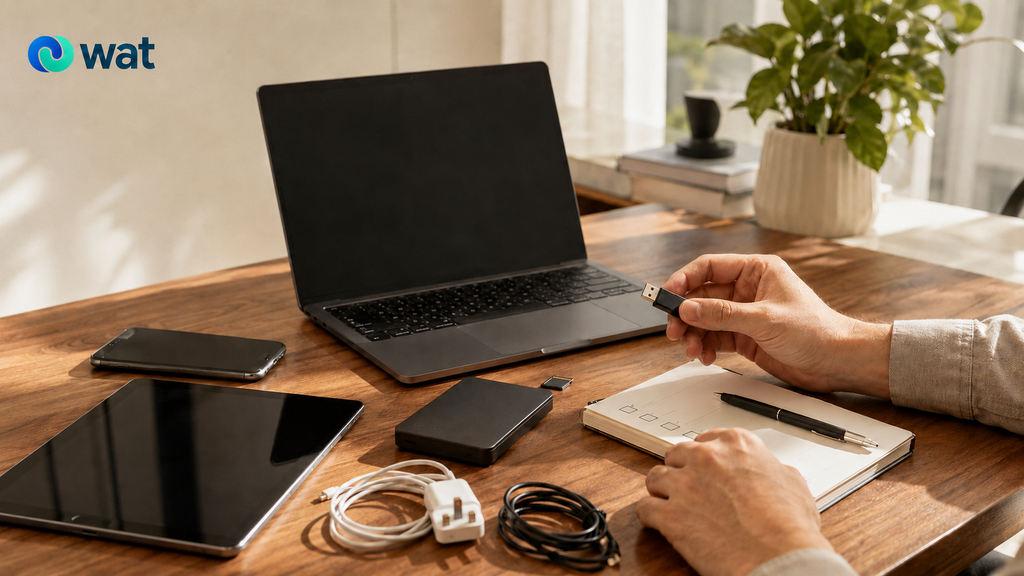
If data removal, hard disk shredding, asset destruction, or another secure handling route is needed, WAT’s Remove Data services can support a more controlled process.
How to decide: remove, repair, reuse, or recycle
A simple decision process can help.
Start with these questions:
- Does the device still work?
- Is it still needed by someone in the home?
- Is the problem repairable at a reasonable cost?
- Would the device actually be used again after repair?
- Does the device contain personal or business data?
- Does it have a battery issue, swelling, overheating, leaking, or visible damage?
- Has the item been unused for months or years?
- Could it be reused, repaired, securely handled, or responsibly recycled?
The answer does not need to be the same for every item.
A working laptop may be reused after data is reviewed. A cracked phone may be repaired. A damaged power bank may need careful handling. Old cables and chargers may belong in an e-waste collection route. A device that cannot be repaired or reused may need responsible recycling.
The important point is that electronics should not stay unmanaged simply because the decision feels inconvenient.
Be careful with damaged or battery-containing electronics
Some electronics need extra care before collection.
This includes items with swollen batteries, overheating issues, leakage, exposed wires, cracked casing, burning smell, or signs of water damage.
These items should not be kept casually in drawers, near heat, or mixed with regular household waste. They should be stored carefully and moved into a responsible handling route as soon as practical.
For damaged electronics, safe temporary storage matters before collection. WAT has covered this in the related guide, Damaged Office Electronics in the UAE: What to Do Before E-Waste Pickup.
The problem with keeping electronics “just in case”
Many old electronics stay at home because people think they may need them later.
Sometimes that is true. A spare charger or backup phone may still be useful.
But many items are kept without a real plan.
“Just in case” storage often turns into:
- drawers full of cables
- old phones with forgotten data
- unused laptops taking up space
- tablets no one turns on
- chargers that no longer match current devices
- broken gadgets that are never repaired
- batteries aging inside unused devices
A useful rule is to ask: if this item has not been used in the last year, do I have a real plan for it?
If the answer is no, it may be time to repair it, reuse it, pass it into a responsible route, or recycle it.
Why regular trash is not the right place
Old electronics should not be mixed with regular household waste.
Electronics can contain metals, plastics, circuit boards, batteries, and components that need a more responsible route. Some devices may also contain personal data or stored account access.
Putting electronics into regular trash removes the chance to review whether the item could be repaired, reused, securely handled, or recycled responsibly.
A better approach is to keep electronics separate and move them into a dedicated e-waste collection process.
For a broader explanation of why electronics need a separate route, see WAT’s related blog,
The Importance of the E-Waste Recycling in Dubai.
What people should avoid
When dealing with old electronics at home, avoid:
- throwing phones, laptops, tablets, or chargers into regular trash
- assuming only broken devices can go to an e-waste management company
- keeping damaged devices near heat or moisture
- ignoring swollen or overheating batteries
- handing over data-bearing devices without reviewing personal information
- assuming working devices have no responsible route
- storing unused electronics indefinitely
- mixing electronics with food waste or household waste
The aim is not to rush disposal.
The aim is to make a clearer decision.
FAQs
Is removal or repair only for broken electronics?
No. This decision also applies to working, unused, upgraded, duplicate, or unwanted electronics. A device does not need to be broken before it can enter a responsible handling or collection route.
Can working electronics be submitted to an e-waste management company?
Yes. Working electronics may still be suitable for reuse, repair, repurposing, secure handling, or responsible recycling. Many people have devices that still work but are no longer needed.
Should old phones and laptops be repaired or removed?
It depends on the condition, usefulness, repair cost, data-security needs, and whether the device will realistically be used again. If it still has value and repair is practical, repair may make sense. If it is no longer needed, it should move into a responsible route.
Why should data be considered before handing over old electronics?
Phones, laptops, tablets, USB drives, and hard drives may contain personal files, saved passwords, accounts, photos, or work information. These devices should be reviewed carefully before repair, reuse, recycling, or handover.
Can chargers, cables, and accessories be handled as e-waste?
Yes. Old chargers, cables, adapters, and tech accessories are e-waste and should be placed into a responsible e-waste route rather than regular trash.
If you have old, unused, working, damaged, upgraded, or unwanted electronics sitting at home, they do not need to stay in drawers or end up in regular waste.
WAT can help people in the UAE move electronics into a more responsible route, whether the item may be suitable for reuse, repair, secure data handling, or recycling.
Request an e-waste collection or contact WAT to discuss how to handle old phones, laptops, tablets, chargers, cables, accessories, and other electronics more responsibly.