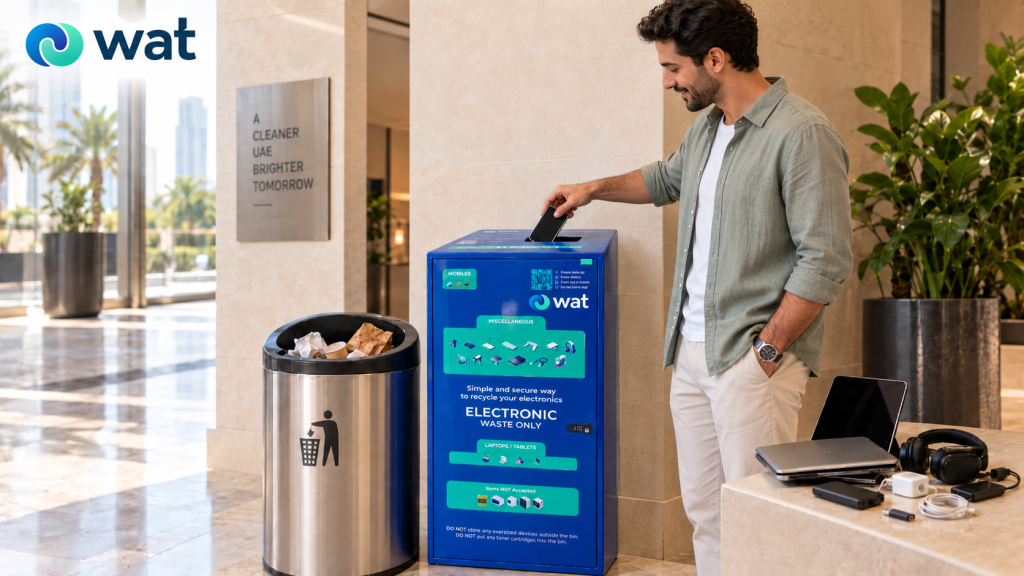
Most people know what a regular trash bin is for.
It is where everyday household waste goes when something no longer has a use. Food packaging, tissues, wrappers, and ordinary rubbish usually have a clear place.
Electronics are different.
A phone is not the same as a food wrapper. A laptop is not the same as a cardboard box. A tablet, charger, cable, power bank, USB drive, or old gadget may contain materials, batteries, components, or personal data that should not disappear into regular waste.
That is why e-waste bins matter.
For people in the UAE, the difference between an e-waste bin and a regular trash bin is not only about recycling. It is also about safety, data security, responsible handling, and making sure electronics enter the right route instead of being mixed with general waste.
This guide explains what makes e-waste bins different, what types of electronics may belong in them, and why regular trash bins are not the right place for old devices.
Why regular bins are not enough
Some electronics need a separate collection route because they are not the same as ordinary household waste. The U.S. EPA advises that lithium-ion batteries and devices containing them should not go into household garbage or regular recycling bins. If these batteries or devices are damaged or crushed during transport or waste processing, they can create a fire hazard.
This is one reason e-waste bins matter. They help people in the UAE separate phones, tablets, laptops, power banks, chargers, cables, and other electronics from regular trash before those items enter the wrong waste stream.
Why the bin you choose matters
At home, it can be tempting to treat old electronics like any other unwanted item.
A charger stops working, so it goes in the trash. A broken phone sits in a drawer for years and then gets thrown away during a cleanup. A tablet is replaced by a newer model and eventually ends up in a mixed waste bag. A box of cables looks useless, so it is cleared out with regular rubbish.
The problem is that electronics do not behave like normal waste.
They can contain circuit boards, metals, plastics, batteries, screens, storage parts, and other components that need a more responsible route. Some devices may also contain personal photos, messages, work files, saved passwords, account access, or other private information.
A regular trash bin removes visibility. Once an electronic device is mixed with general waste, it becomes harder to review whether it should have been reused, repaired, securely handled, or recycled.
An e-waste bin creates a separate starting point.
It helps people place electronics into a more suitable collection stream before they are lost in regular household waste.
What is an e-waste bin?
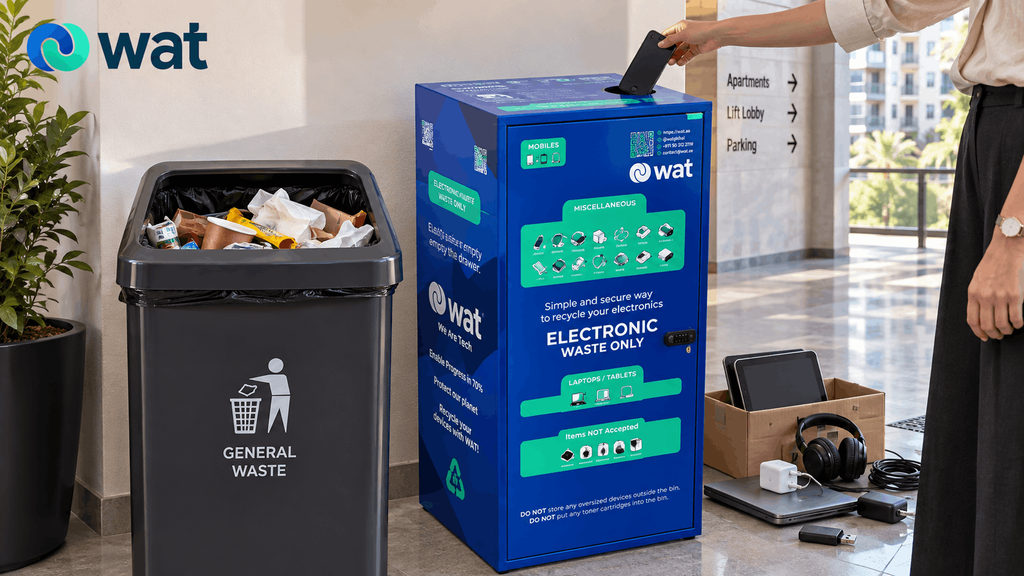
An e-waste bin is a dedicated collection point for electronic items that should not be mixed with ordinary trash.
Depending on the collection setup and provider guidance, e-waste bins may support the collection of items such as:
● phones
● laptops
● tablets
● chargers
● cables and wires
● headphones and speakers
● computer accessories
● small gadgets
● USB drives and storage devices
● power banks
● routers and small networking devices
● electronic accessories
The important point is that e-waste bins are not only for cables or small accessories.
They can also be relevant for laptops, tablets, phones, and other data-bearing electronics, especially when the bin is part of a secure and responsible collection route.
What is a regular trash bin for?
A regular trash bin is designed for ordinary waste, not electronics.
It may be suitable for general household rubbish, but it is not designed to manage items with batteries, circuit boards, data storage, screens, wires, or recoverable materials.
This is why old electronics should not be treated like normal trash.
A broken charger may look small, but it is still electronic waste. A phone that no longer turns on may still contain storage. A laptop that has been replaced may still hold a hard drive or saved account access. A power bank may have a battery that needs extra care.
The regular trash bin does not create the right route for these items.
Data-bearing devices need extra care
The biggest difference between e-waste and regular waste is not always visible.
A phone, laptop, tablet, USB drive, hard drive, memory card, or some smart devices may still contain personal or business data even after they stop being used.
This can include:
● photos and videos
● saved passwords
● banking or payment apps
● emails and messages
● work or school files
● identity documents
● contact lists
● cloud account access
That is why data-bearing electronics should not be thrown into regular trash.
A device does not need to be working perfectly to create a data concern. A laptop that does not switch on may still contain a drive. A broken phone may still hold storage. A USB drive may still contain files even if it has been unused for years.
If a device may contain sensitive information, people should think about secure handling before repair, reuse, recycling, or handover.
A secure e-waste bin is not just an open box
There is also a difference between a proper e-waste bin and an informal collection box.
Sometimes people place old electronics in open cartons, bags, drawers, or storage boxes and assume that counts as responsible disposal. It may help keep items separate for a short time, but it is not the same as a managed e-waste collection route.
This matters more when the item is a phone, laptop, tablet, USB drive, hard drive, power bank, or damaged electronic device.
A secure e-waste collection route should help reduce the chance of electronics being mixed with regular trash, left unmanaged, or handled casually before pickup.
For example, WAT’s e-waste bins and collection process can help people and businesses in the UAE move old electronics into a more responsible route, especially when devices may need reuse review, recycling, data removal, hard disk shredding, asset destruction, or other secure handling.
The bin is not the whole process. It is the first controlled step.
Need a safer place for old electronics?
If old phones, laptops, tablets, chargers, cables, USBs, or power banks are sitting at home, WAT’s e-waste bins can help keep them separate from regular trash and move them into a more responsible route.
Request a collection or contact WAT to discuss the right e-waste route before these items are mixed with regular household waste.
Working electronics can also go into a responsible route
Another common misunderstanding is that e-waste bins are only for broken items.
That is not the case.
A working phone that is no longer needed still needs a responsible next step. A laptop replaced during an upgrade should not stay forgotten in a drawer. A tablet that still works but has no current use should not be mixed with regular waste.
Electronics can enter a responsible route because they are:
● working but no longer needed
● new or unused but unwanted
● replaced during an upgrade
● duplicate items
● stored for too long without use
● damaged or unsafe
● data-bearing and in need of secure handling
● not suitable for repair or reuse
The goal is not to call every old item waste. The goal is to move each item into the right path.
Some devices may be reused. Some may be repaired. Some may need secure data handling. Some may need responsible recycling. The first step is keeping them separate from regular trash.
Why batteries and damaged electronics need attention
Some electronics need extra care because they contain batteries or show signs of damage.
This can include phones, tablets, laptops, power banks, wireless headphones, small gadgets, and rechargeable accessories.
People should be especially careful with items that show:
● swollen batteries
● overheating
● leaking
● burning smell
● exposed wires
● cracked casing
● water damage
● unusual sounds or heat during charging
These items should not be casually mixed with household rubbish or left near heat, moisture, or clutter.
If an item looks damaged or unsafe, it may need separate handling advice before collection. The safest approach is to keep it separate, avoid charging it, and move it into a responsible route as soon as practical.
How people in the UAE can sort electronics at home
A simple home cleanup can make the decision easier.
Instead of putting everything into one bag, sort electronics into clear groups:
● phones, laptops, and tablets
● chargers, adapters, and cables
● USBs, drives, and memory cards
● power banks and battery-containing gadgets
● working devices that are no longer needed
● items that may be repairable
● damaged or unsafe items
● small accessories and gadgets
Once items are sorted, it becomes easier to decide what should be repaired, reused, securely handled, or placed into an e-waste collection route.
For a related decision guide, see the WAT blog:
Remove or Repair? How People in the UAE Can Decide What to Do With Old Electronics.
What should not go into regular trash
As a practical rule, people should avoid putting electronics into regular trash when they contain batteries, circuit boards, wires, screens, or storage components.
This includes:
● phones
● laptops
● tablets
● USB drives
● hard drives
● chargers and cables
● power banks
● headphones and speakers
● routers
● computer accessories
● small electronic gadgets
The item may be small, but it may still need responsible handling.
For a broader explanation of why electronics need a separate route, see WAT’s related blog:
The Importance of the E-Waste Recycling in Dubai.
How e-waste bins support better everyday habits
E-waste bins work because they make the right action easier.
When people see a clear e-waste collection point, they are more likely to keep electronics separate from regular trash. This helps reduce clutter at home, improves sorting, and gives old devices a better chance of entering a responsible process.
A dedicated e-waste bin also helps people remember that electronics may need review before final handling.
A charger may simply need recycling. A working tablet may be suitable for reuse. A phone may need a data review. A laptop may need secure handling. A damaged power bank may need extra caution.
Regular trash treats all waste the same way. A responsible e-waste route allows electronics to be handled according to what they are.
FAQs
What is the difference between an e-waste bin and a regular trash bin?
A regular trash bin is for ordinary waste. An e-waste bin is for electronics such as phones, laptops, tablets, chargers, cables, accessories, and small gadgets that should enter a responsible collection route.
Can laptops, tablets, and phones go into an e-waste bin?
Yes, where the bin is part of a secure and responsible collection process. These devices may contain personal data, so they should not be treated like ordinary trash.
Are e-waste bins only for broken electronics?
No. Working, unused, upgraded, duplicate, damaged, or unwanted electronics can all need a responsible next step. Some may be reused, repaired, securely handled, or recycled.
Can chargers and cables go into an e-waste bin?
Yes. Chargers, cables, adapters, and similar accessories can be handled as e-waste and should be kept separate from regular trash.
Why should data-bearing devices be handled carefully?
Phones, laptops, tablets, USB drives, and hard drives may contain photos, saved passwords, accounts, work files, or other private information. They should be reviewed before repair, reuse, recycling, or handover.
If you have old phones, laptops, tablets, chargers, cables, USBs, power banks, accessories, or other electronics at home, they do not need to end up in regular trash. WAT’s e-waste bins and collection process can help people in the UAE move electronics into a more responsible route, whether the item may be suitable for reuse, repair, secure data handling, or recycling.
Request a collection or contact WAT to discuss how to handle old electronics more responsibly through a dedicated e-waste route.