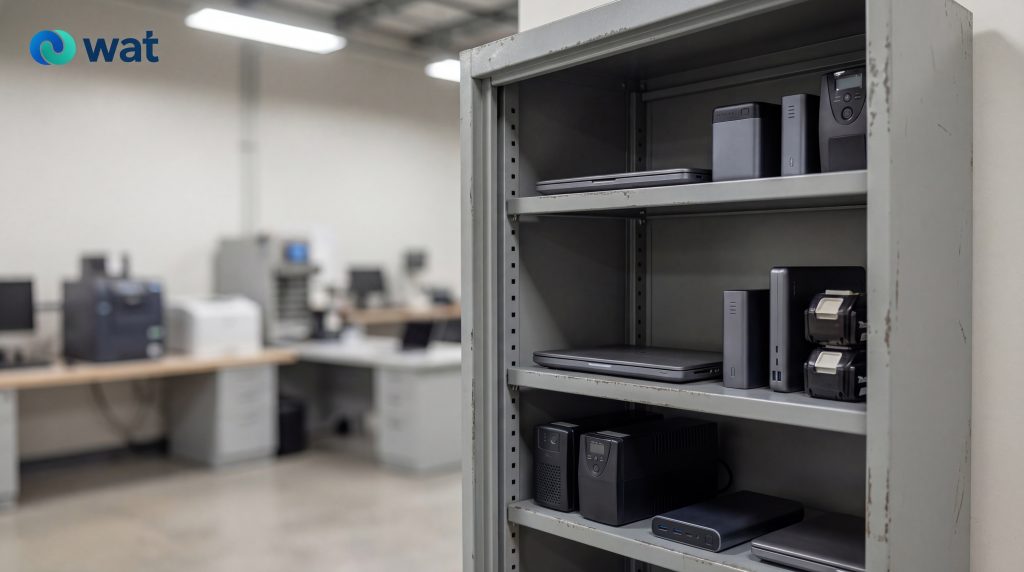
Lithium-ion batteries have become standard equipment in modern workplaces. They power laptops and tablets, help teams stay powered during travel and on-site work, support field operations through cordless tools, and provide continuity through UPS systems and backup packs. As more devices become portable and battery-powered, the volume of battery-containing equipment moving through offices, warehouses, retail sites, and facilities has grown quietly—but significantly.
With that growth comes a simple operational truth: batteries shouldn’t be treated like ordinary office waste. When battery-powered devices reach end of life, or when batteries are damaged or defective, the handling and handover process matters. A clear, consistent approach reduces avoidable risk, keeps operations tidy, and supports responsible disposal.
This guide explains how UAE organizations can manage lithium-ion batteries in a practical, workplace-friendly way—without overcomplicating the process.
What “lithium-ion battery waste” looks like in a business setting
In most companies, batteries appear in two common forms:
Standalone battery items, such as power banks, removable tool batteries, spare packs, or loose batteries from equipment maintenance.
Batteries embedded in devices, including laptops, phones, tablets, handheld scanners, radios, and other portable electronics.
It’s worth noting that battery management often overlaps with IT asset retirement. A laptop, for example, is both a battery-containing device and a data-bearing asset. Treating it as “just e-waste” can create gaps in security, tracking, and documentation. Treating it as a controlled end-of-life asset closes those gaps.
Why lithium-ion batteries require a more disciplined process
Lithium-ion batteries are widely used because they’re efficient and rechargeable. But they are also sensitive to rough handling at the end of their usable life—especially when batteries are damaged, swollen, defective, or stored poorly.
In day-to-day workplace terms, the biggest problems usually come from routine habits rather than major incidents. Batteries get tossed into mixed bins. Devices are piled in storerooms. Loose batteries get mixed with cables, scrap, or general waste. Collection becomes ad-hoc, and teams lose clarity on what should happen next.
A disciplined process doesn’t need to be complex. It needs to be predictable. When employees know where items go, how they’re separated, and how handover is handled, the risks drop and the workplace stays in control.
A practical workplace approach that teams can actually follow
The most effective battery handling programs are the ones that are easy to execute. The goal is to create a simple internal flow—from collection to storage to handover—that doesn’t rely on guesswork.
1) Establish ownership so responsibility doesn’t “float”
Battery waste often sits between departments: IT, facilities, HSE, procurement, and operations. Assign one owner to coordinate the process (even if multiple teams contribute). That owner doesn’t need to do everything; they need to ensure the process is followed consistently.
2) Create a clearly labeled collection point
Choose a controlled location that is easy for staff to access but not exposed to constant traffic. Clear labeling matters more than most teams expect—because it prevents “temporary storage” from turning into mixed storage.
As a practical standard, the collection point should be away from heat sources and direct sunlight, and it should be treated as a controlled area rather than a dumping spot.
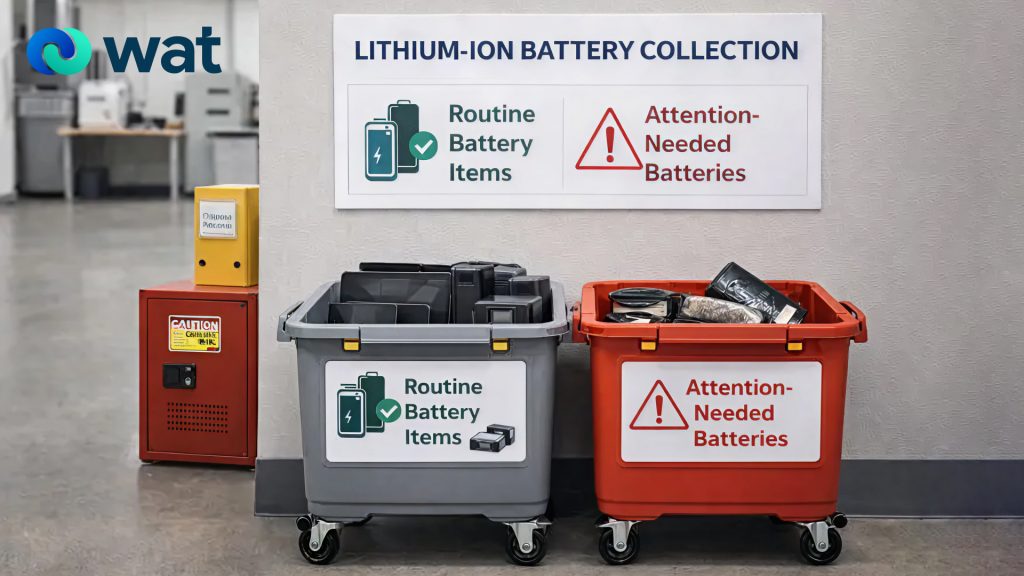
3) Separate routine battery items from “attention-needed” batteries
Not all battery waste is equal. A structured workplace process typically separates items into two lanes:
- Routine end-of-life items (intact devices and intact batteries ready for retirement)
- Batteries that require extra caution (damaged, swollen, leaking, or visibly compromised items)
4) Avoid handling behaviors that create unnecessary risk
Most battery-related safety issues in workplaces are not caused by complicated technical problems; they’re caused by simple physical factors. Build internal habits that minimize physical stress on batteries: avoid crushing, puncturing, compacting, or stacking in ways that cause impact damage. Also avoid dismantling battery packs internally unless there is a controlled, approved process for it.
The goal is not to alarm teams. The goal is to remove preventable handling mistakes.
Planning for common workplace battery sources
Different departments generate different battery waste. Planning by category makes disposal easier.
Power banks and portable chargers
These are common in offices, events teams, and mobile operations. The best approach is to retire them through the same battery stream rather than letting them sit in drawers indefinitely. If your workplace runs campaigns or field activities, power banks can accumulate quickly and often go untracked.
Laptops, tablets, and phones
These devices require a coordinated approach because they combine batteries and corporate data. Even when the disposal route is responsible, the internal process should be clear on what happens before handover (for example, device collection, tracking, and data handling protocols).
Cordless tools and site equipment
Tools are frequently shared, moved, and retired informally. For these, centralizing retirement through a supervisor-managed handover point prevents “end-of-life” tools from ending up in scrap piles or mixed disposal streams.
UPS units and backup batteries
UPS systems are often treated as facilities assets and can be overlooked until failure. Include UPS batteries in planned maintenance and replacement cycles, and retire them through a controlled route rather than waiting until they become an urgent disposal issue.
What responsible disposal looks like in practice in the UAE
In UAE workplaces, responsible battery disposal typically means three things:
An appropriate route: batteries and battery-containing devices should be handed over through a licensed, authorized channel rather than informal disposal pathways.
Basic traceability: your team should be able to confirm what was retired, when it was handed over, and which party received it.
Documentation: clear handover records reduce uncertainty and strengthen internal governance—especially for companies that maintain operational or sustainability reporting.
This isn’t about creating paperwork for the sake of it. It’s about keeping the process defensible and consistent, particularly when battery waste is part of a larger e-waste stream.
A simple internal checklist you can adopt without creating bureaucracy
If you want a lightweight starting point, aim for the following internal standards:
- A labeled collection point exists and is communicated to staff.
- Battery-containing devices are not mixed with general waste.
- Damaged or swollen batteries are separated from routine items.
- Teams avoid rough handling that increases physical stress on batteries.
- A basic disposal log is maintained (date, item type, quantity, department).
- A clear handover process exists with documented transfer to an authorized partner.
How WAT supports workplace battery-related e-waste handling
For many organizations, the hardest part is not identifying battery waste—it’s creating a consistent, repeatable process for collection, handover, and documentation.
WAT supports UAE businesses by helping them manage battery-containing devices through a structured, responsible workflow. That includes coordinated collection, appropriate routing for recycling and treatment, and documentation that supports internal controls and accountable disposal practices.
Ready to retire power banks, laptops, UPS units, or battery-powered tools responsibly? Reach out to WAT to schedule a collection and keep your workplace disposal process clear, safe, and well-documented.