How the UAE’s EPR Rules Will Impact Corporate E-Waste Management
Extended Producer Responsibility (EPR) is becoming an increasingly important part of global waste-management and sustainability frameworks. In the UAE, EPR is now firmly part of the national conversation around environmental responsibility, circular economy principles, and long-term waste reduction.
For organizations operating in the UAE, the key question is no longer whether EPR will shape e-waste management practices – but how businesses can prepare for its arrival in a structured and responsible way.
This article explains what EPR means, how it is applied internationally, how it fits within the UAE’s current waste-management landscape, and what companies should be doing today to stay aligned with evolving expectations.
What Is Extended Producer Responsibility (EPR)?
Extended Producer Responsibility is a policy approach used internationally to improve how waste is managed across its lifecycle. It extends responsibility for products beyond the point of sale and into their end-of-life stage.
Where EPR frameworks are in place, they are commonly designed to:
- Improve environmentally responsible disposal of waste
- Increase recycling and recovery rates
- Support sustainable product lifecycle management
EPR models differ from country to country, depending on local legislation, infrastructure, and enforcement mechanisms. What they share, however, is a focus on accountability, traceability, and responsible handling of waste streams.
EPR and the UAE’s Sustainability Direction
The UAE has introduced a range of national initiatives focused on sustainability, waste reduction, and circular economy principles. These initiatives reflect a broader commitment to improving environmental performance and strengthening waste-management practices across sectors.
Within this context, EPR is widely recognized as a future component of how waste – including electronic waste – will be governed. While the detailed structure of an e-waste-specific EPR framework has not yet been formally defined, its alignment with the UAE’s environmental objectives is clear.
For businesses, this means that expectations around responsible e-waste management are increasing, even as regulatory frameworks continue to evolve.
Existing Waste-Management Requirements for E-Waste in the UAE
While a dedicated EPR framework for e-waste is still taking shape, electronic waste in the UAE is already governed under broader environmental and waste-management regulations.
Under existing requirements:
- Electronic waste must be handled, transported, and disposed of through authorized and licensed entities
- Hazardous components must be treated in accordance with environmental standards
- Organizations are expected to maintain appropriate records of disposal activities
These requirements form the baseline for responsible e-waste management today and are likely to remain relevant as future frameworks develop.
International EPR Models: What They Show
Globally, EPR has been implemented in various forms to manage electronic waste more effectively.
In the European Union, the Waste Electrical and Electronic Equipment (WEEE) Directive establishes producer responsibility for the collection and treatment of e-waste. In the United Kingdom, producers of electrical equipment are required to register and contribute to authorized recycling schemes.
These international models demonstrate how EPR can be structured to improve oversight, traceability, and environmental outcomes. They are useful reference points for understanding how EPR works in practice, without implying how the UAE will ultimately design its own approach.
What UAE Businesses Should Be Doing Now
As EPR becomes a more prominent part of sustainability discussions, businesses should focus on practical readiness, rather than waiting for formal mandates.
Key areas of focus include:
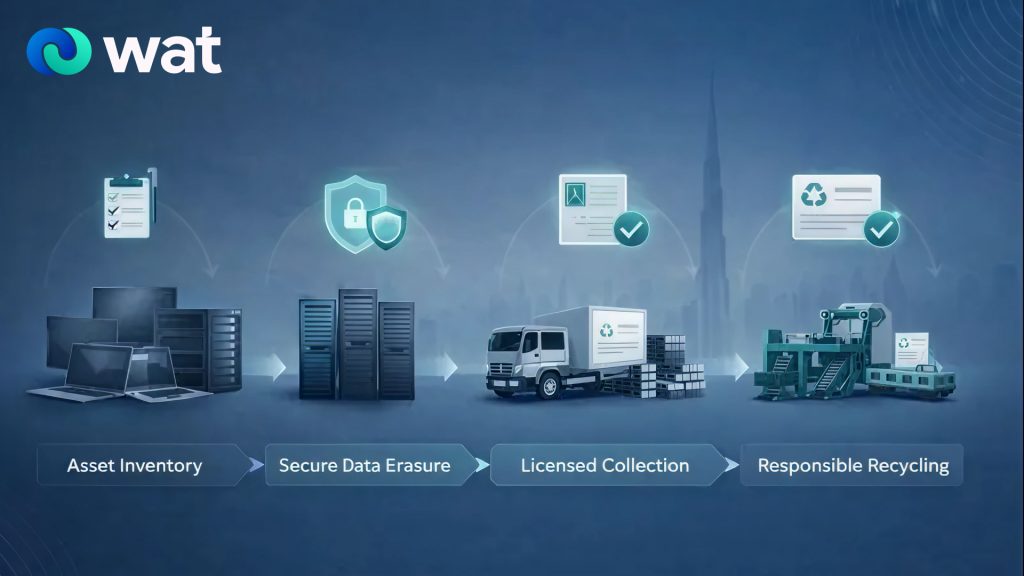
- Ensuring e-waste is managed through licensed and authorized recycling facilities
- Maintaining clear traceability and documentation for disposed electronic assets
- Implementing secure data destruction processes for IT equipment
- Integrating e-waste handling into broader sustainability and governance frameworks
Businesses involved in IT upgrades, digital transformation, or asset refresh cycles are particularly well positioned to strengthen these processes now.
Learn more about WAT’s e-waste recycling services and IT asset disposal solutions for businesses in the UAE.
Preparing for EPR Through Strong Internal Practices
Effective preparation for future regulatory developments does not require speculation. It requires strong internal controls and responsible operational practices.
Recommended actions include:
- Conducting regular audits of electronic assets
- Defining clear IT asset retirement and disposal policies
- Working with experienced, compliant e-waste management providers
- Staying informed through official government communications
These steps help organizations remain aligned with both current requirements and future expectations.
Why Responsible E-Waste Management Matters
Improper handling of electronic waste can expose organizations to environmental, operational, and data-security risks. Secure and compliant disposal supports:
- Environmental responsibility
- Data protection and risk mitigation
- Corporate sustainability commitments
- Reduction of lithium-ion battery fire risks
For UAE businesses, responsible e-waste management is an important indicator of accountability and long-term resilience.
Extended Producer Responsibility is becoming an integral part of global e-waste management, and its relevance in the UAE continues to grow. While the regulatory framework is still evolving, the direction is clear: greater accountability, stronger controls, and more structured management of electronic waste.
Organizations that focus today on compliance, traceability, and responsible disposal practices are better positioned to adapt smoothly as EPR-related requirements take shape.
If your organization is reviewing e-waste governance or strengthening IT asset retirement procedures, contact WAT to discuss compliant e-waste recycling and IT asset disposal support in the UAE.