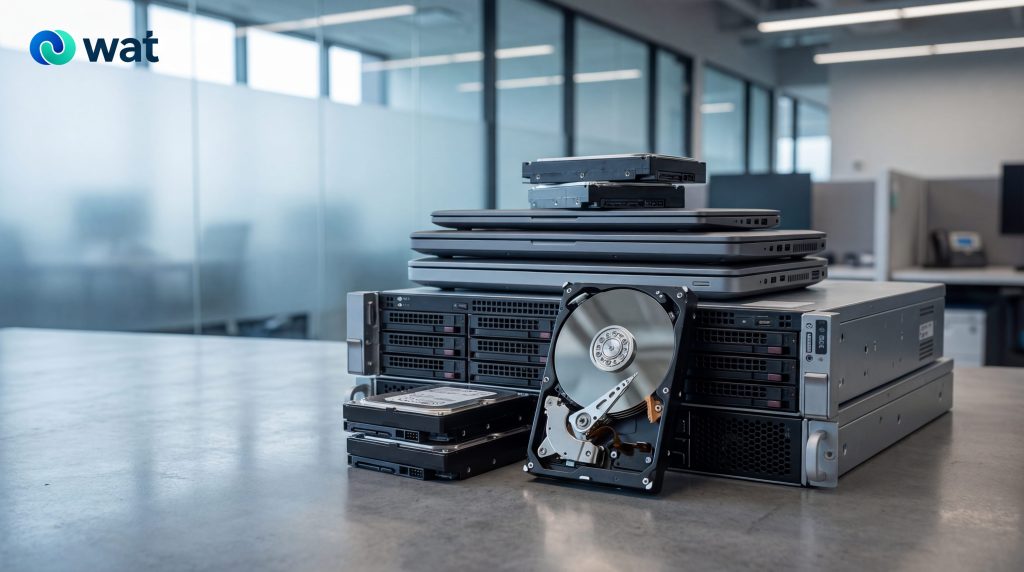
As UAE businesses continue to modernize their IT infrastructure, the volume of retired electronic equipment is increasing. Servers, laptops, desktops, storage devices, and networking equipment often contain sensitive corporate and personal data even after they are no longer in use.
Improper handling of end-of-life IT assets can expose organizations to data-security risks, compliance issues, and reputational damage. This is why IT Asset Disposal (ITAD) must be treated as a security-critical process, not just a waste-management task.
This article outlines the most common data-security risks associated with ITAD and explains how UAE businesses can mitigate them through responsible and compliant practices.
What Is IT Asset Disposal (ITAD)?
IT Asset Disposal refers to the controlled process of managing IT equipment once it reaches the end of its operational life. This includes:
- Secure handling of devices
- Data destruction or sanitization
- Environmentally responsible recycling or disposal
- Proper documentation and traceability
For organizations operating in the UAE, ITAD must be approached with equal focus on data protection and environmental responsibility.
Risk 1: Incomplete Data Removal from Devices
One of the most common risks in IT asset disposal is assuming that data has been fully removed when it has not. Simple deletion or formatting does not permanently erase data from storage media.
Residual data can remain on:
- Hard drives
- Solid-state drives
- Servers
- Network storage devices
If these devices are disposed of without proper data destruction, sensitive information may be exposed.
Mitigation:
Use secure data destruction processes appropriate to the storage medium, supported by documentation that confirms the data has been permanently destroyed.
Risk 2: Loss of Assets During Collection or Transport
IT assets may pass through multiple stages before final disposal. Without proper controls, devices can be misplaced, mishandled, or accessed by unauthorized parties during collection or transport.
This risk increases when:
- Assets are stored temporarily without controls
- Chain-of-custody procedures are unclear
Mitigation:
Implement controlled collection procedures and work with service providers that follow documented handling and tracking processes.
Risk 3: Use of unauthorized or Non-Compliant Disposal Providers
Engaging unlicensed or non-compliant service providers can expose organizations to serious risks. Improper disposal may lead to:
- Data leakage
- Environmental violations
- Loss of accountability
In the UAE, electronic waste must be handled through authorized channels in line with environmental regulations.
Mitigation:
Ensure IT assets are processed only by licensed and authorized e-waste and ITAD service providers.
Learn more about WAT’s compliant IT asset disposal services and secure e-waste recycling solutions for UAE businesses.
Risk 4: Lack of Documentation and Traceability
Without proper records, organizations may struggle to demonstrate that IT assets were disposed of securely and responsibly. This can be problematic during audits, internal reviews, or compliance assessments.
Missing documentation may include:
- Asset inventories
- Disposal records
- Data destruction confirmation
Mitigation:
Maintain detailed documentation for each stage of the ITAD process, including asset identification, handling, and final disposition.
Risk 5: Misalignment Between IT and Sustainability Processes
In many organizations, IT asset retirement and sustainability initiatives operate separately. This disconnect can lead to inconsistent handling of electronic waste and overlooked security requirements.
When ITAD is not integrated into broader governance frameworks, risks can be amplified.
Mitigation:
Align IT asset disposal policies with corporate sustainability, risk management, and data governance frameworks to ensure consistency and accountability.
Why Secure ITAD Matters for UAE Businesses
Secure IT asset disposal supports multiple organizational priorities:
- Data protection: Prevents unauthorized access to sensitive information
- Compliance: Supports adherence to environmental and governance expectations
- Reputation: Demonstrates responsible corporate practices
- Sustainability: Ensures electronics are handled responsibly at end of life
Treating ITAD as a strategic process helps organizations reduce exposure while reinforcing operational discipline.
Practical Steps for Strengthening ITAD Practices
UAE businesses can reduce ITAD-related risks by:
- Conducting regular audits of IT assets
- Establishing formal IT asset retirement policies
- Ensuring secure data destruction methods are applied consistently
- Partnering with experienced, compliant ITAD providers
- Maintaining records for accountability and traceability
These steps help organizations manage IT assets responsibly without relying on assumptions or unverified practices.
IT Asset Disposal is a critical intersection of data security, environmental responsibility, and corporate governance. For UAE businesses, improper handling of end-of-life IT equipment can create unnecessary risks.
By identifying common ITAD risks and implementing structured, compliant processes, organizations can:
- Protect sensitive data
- Reduce operational and reputational exposure
- Support responsible e-waste management
Secure and compliant ITAD is not optional – it is an essential component of modern business operations.
If your organization is retiring laptops, servers, storage devices, or networking equipment, WAT can support a secure, compliant IT asset disposal process—from controlled collection to verified data destruction and responsible recycling. Contact WAT to schedule an ITAD pickup and ensure your end-of-life IT assets are handled with clear documentation and traceability.