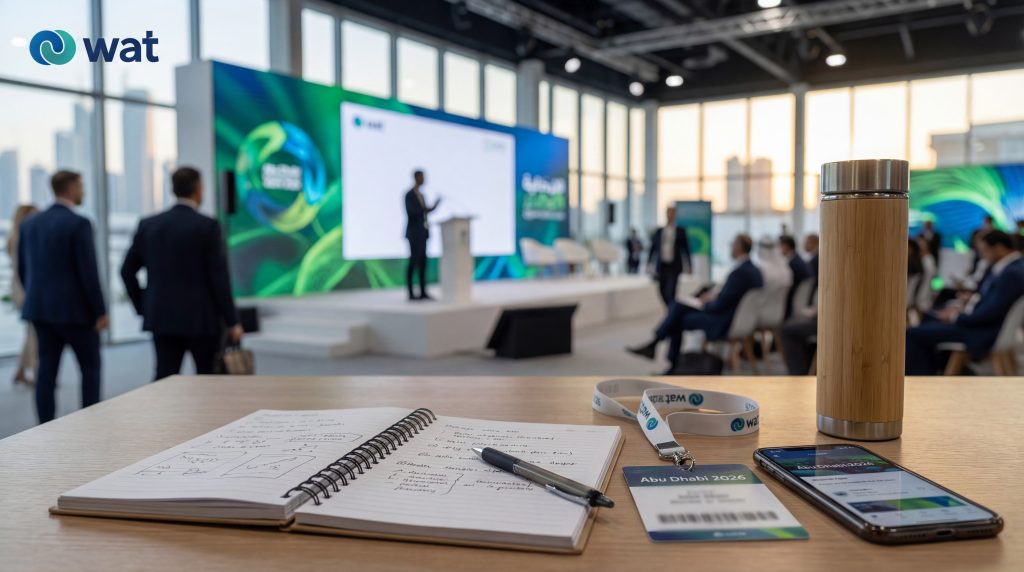
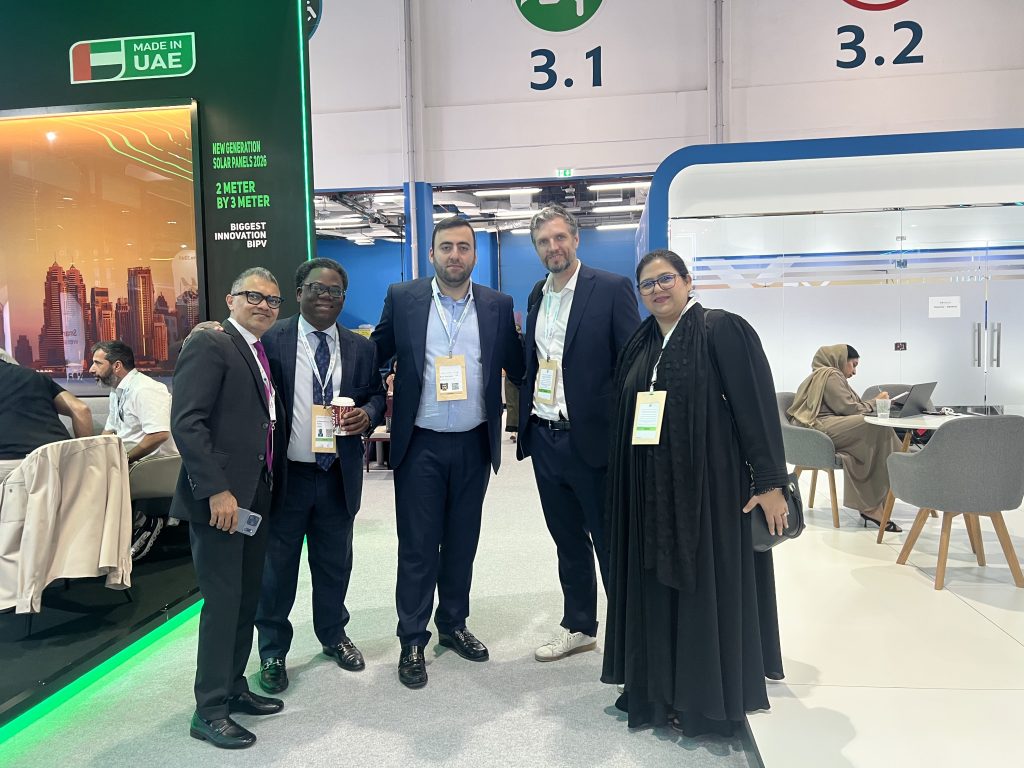
Abu Dhabi Sustainability Week (ADSW) 2026 took place 11–15 January at ADNEC, Abu Dhabi, under the theme “The Nexus of Next: All Systems Go.” The event brought together policymakers, business leaders, innovators, and investors to focus on how interconnected systems—energy, technology, finance, and supply chains—can drive measurable sustainability outcomes.
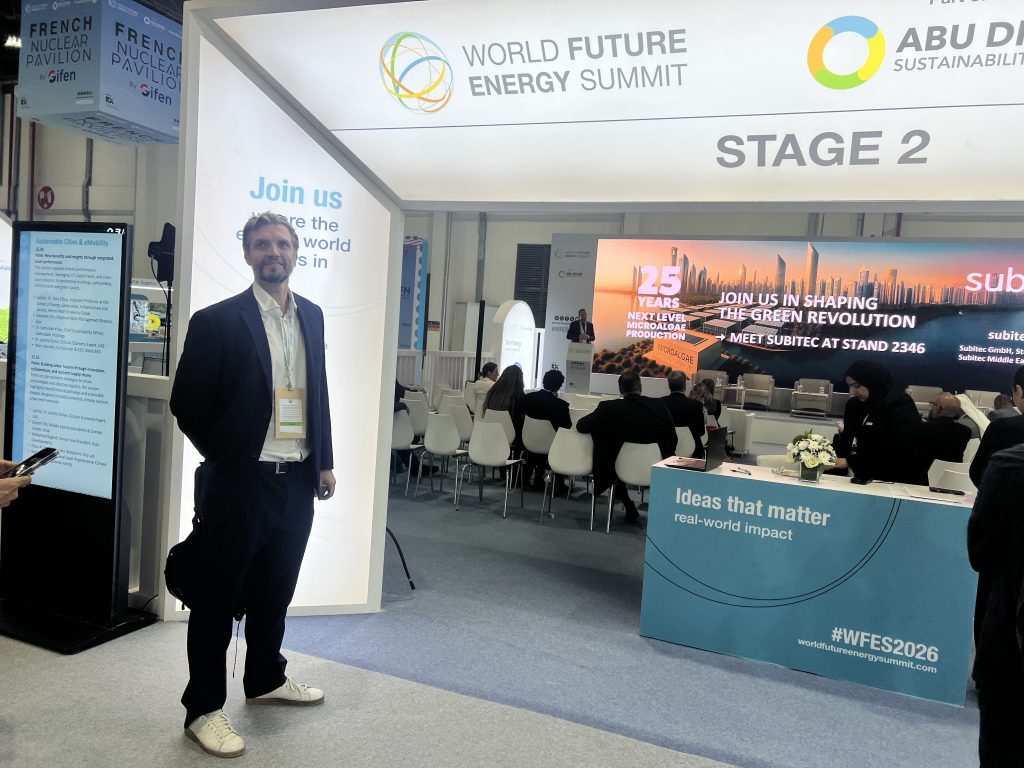
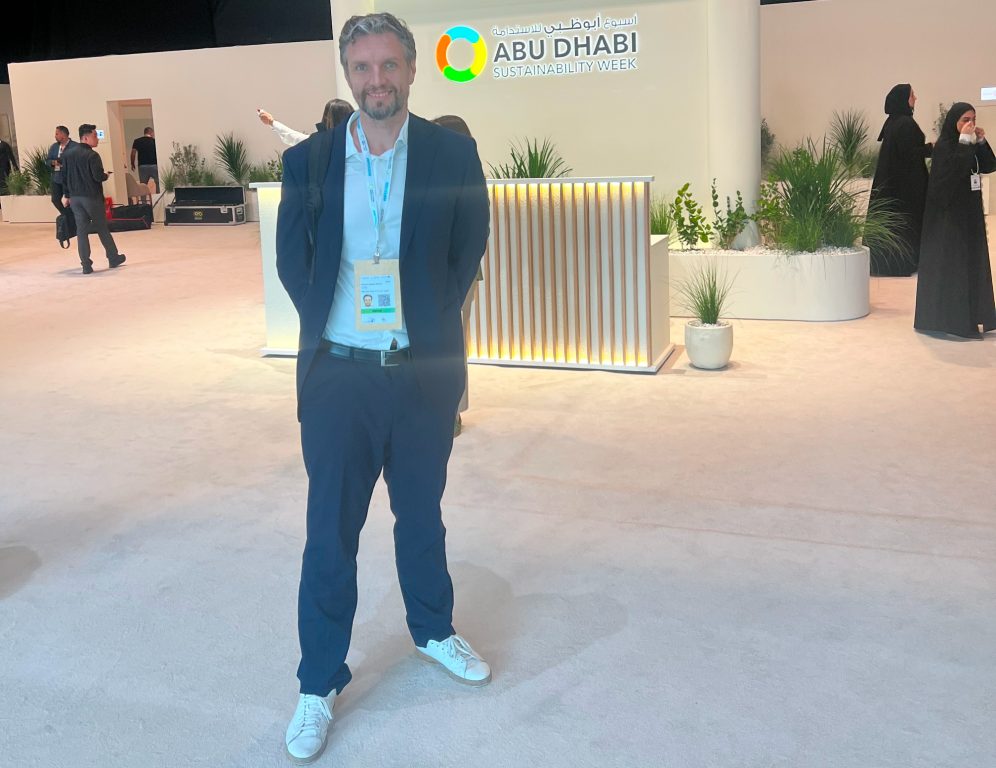
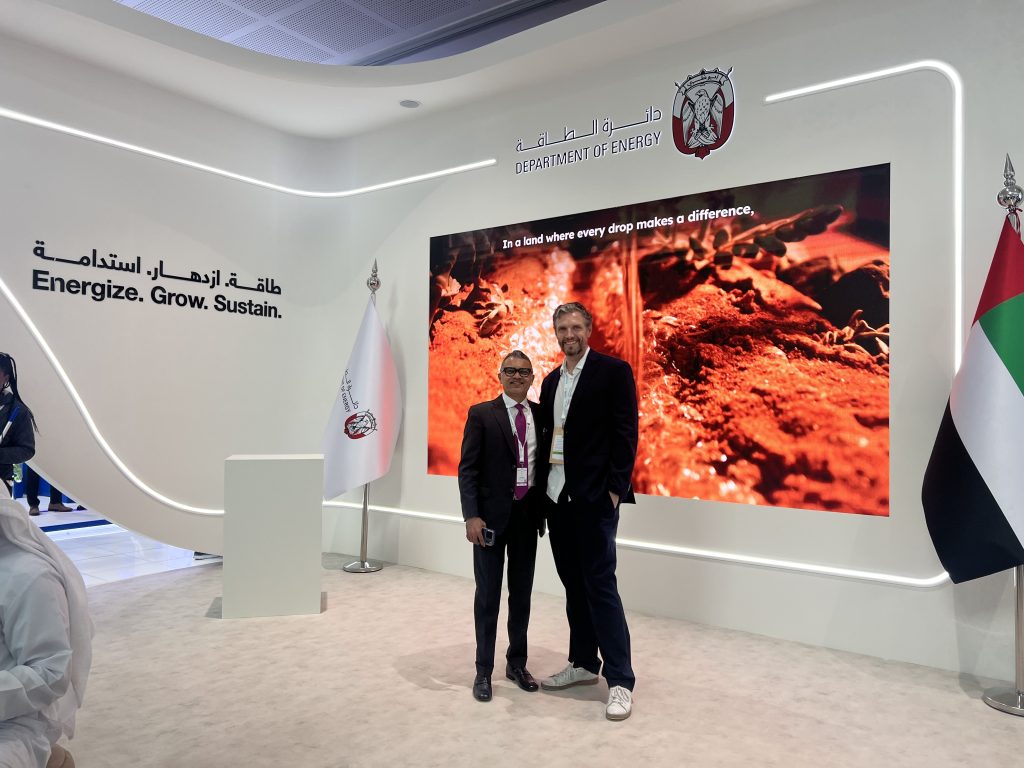
WAT attended ADSW 2026 to stay close to evolving sustainability conversations and to understand how global themes translate into practical execution for organizations operating in the UAE. Our co-founder Greg and our MVP Sakina spent time on the floor and came away with a clear takeaway: sustainability progress is increasingly tied to operational discipline—clear processes, verifiable outcomes, and reporting-ready documentation.
What stood out at ADSW 2026: three themes that matter for organizations
Across sessions and dialogues, one message came through consistently: sustainability performance needs to be backed by traceable data and repeatable operational processes, not only high-level statements. Here are the three themes WAT observed most clearly.
1) Measurable impact is becoming the baseline
ADSW discussions emphasized evidence, traceability, and reporting-ready data rather than vague commitments. For organizations, this typically shows up as practical questions:
- Can we verify where retired assets go after use?
- Can we demonstrate that processes are controlled and documented?
- Can we produce records that support internal governance and sustainability reporting?
This theme isn’t about adding bureaucracy—it’s about reducing uncertainty. When workflows are consistent, the output becomes easier to measure.
2) AI is being positioned as an operational accelerator
AI-driven systems were highlighted as enablers of efficiency, predictive planning, and smarter resource management. In an organizational context, the value isn’t in buzzwords—it’s in what these systems help teams do better:
- Improve visibility into assets across sites
- Reduce manual gaps in tracking and reporting
- Support better planning around upgrades, replacements, and retirements
For many teams, the bottleneck isn’t intent—it’s execution. Tools that simplify tracking and reduce friction support stronger sustainability outcomes over time.
3) Interconnected resilience is a strategic necessity
Interconnected resilience—energy security, materials recovery, and circular economy practices—was discussed as essential for long-term resilience. For organizations, this reinforces a practical reality: sustainability is tied to continuity, risk management, and disciplined operations.
When supply chains, materials, and technology are interconnected, weak points in one area can create problems elsewhere. That’s why consistent handling of end-of-life assets matters more than many teams expect—because asset retirement sits at the intersection of operations, risk, and sustainability.
Why this matters specifically for business, IT, and facilities teams
For IT and facilities leaders, the themes above translate into practical responsibilities. Across sessions, the message was that sustainability performance must be supported by clear operational processes. In day-to-day terms, this often means:
- Understanding where assets go after use (and being able to verify it)
- Protecting data as part of retirement workflows (not as an afterthought)
- Measuring and documenting outcomes in a way that supports internal accountability
When these elements are unclear, the risk isn’t only environmental. It becomes operational: inconsistent storage, fragmented ownership, incomplete documentation, and avoidable exposure.
A 15-minute internal action exercise (use this with your team)
If you want to turn ADSW takeaways into something actionable, here’s a short exercise you can run with IT, facilities, procurement, sustainability, and compliance stakeholders. The goal is to identify one improvement you can implement immediately and repeat.
1) Traceability: In the last 12 months, do we know where retired IT and electronic assets ended up?
2) Data: Are we capturing disposal outputs (e.g., recovery volumes or environmental impact data) in a consistent format?
3) Action: What is one workflow we can standardize this quarter to improve asset retirement and reporting readiness?
By the end of 15 minutes, you should have one named owner, one change to implement, and a date to review progress.
Turning ADSW themes into real operational progress
The strongest lesson from ADSW 2026 is that sustainability outcomes become easier to deliver when the underlying workflows are clear and consistent. For many organizations, real progress starts with a few practical decisions:
- Who owns asset retirement approvals and sign-off?
- Where do retired assets sit before handover—and is that controlled?
- Is data protection embedded as a standard retirement step?
- Are outputs documented in a format that supports reporting?
These are operational questions. And they are solvable without overhauling everything at once. One well-defined workflow, repeated quarterly, can materially improve governance and reporting readiness over time.
If your organization wants to strengthen its asset retirement workflow—improving traceability, data handling, and documentation—contact WAT to discuss a compliant, operationally clean e-waste handover process designed for organizations operating in the UAE.